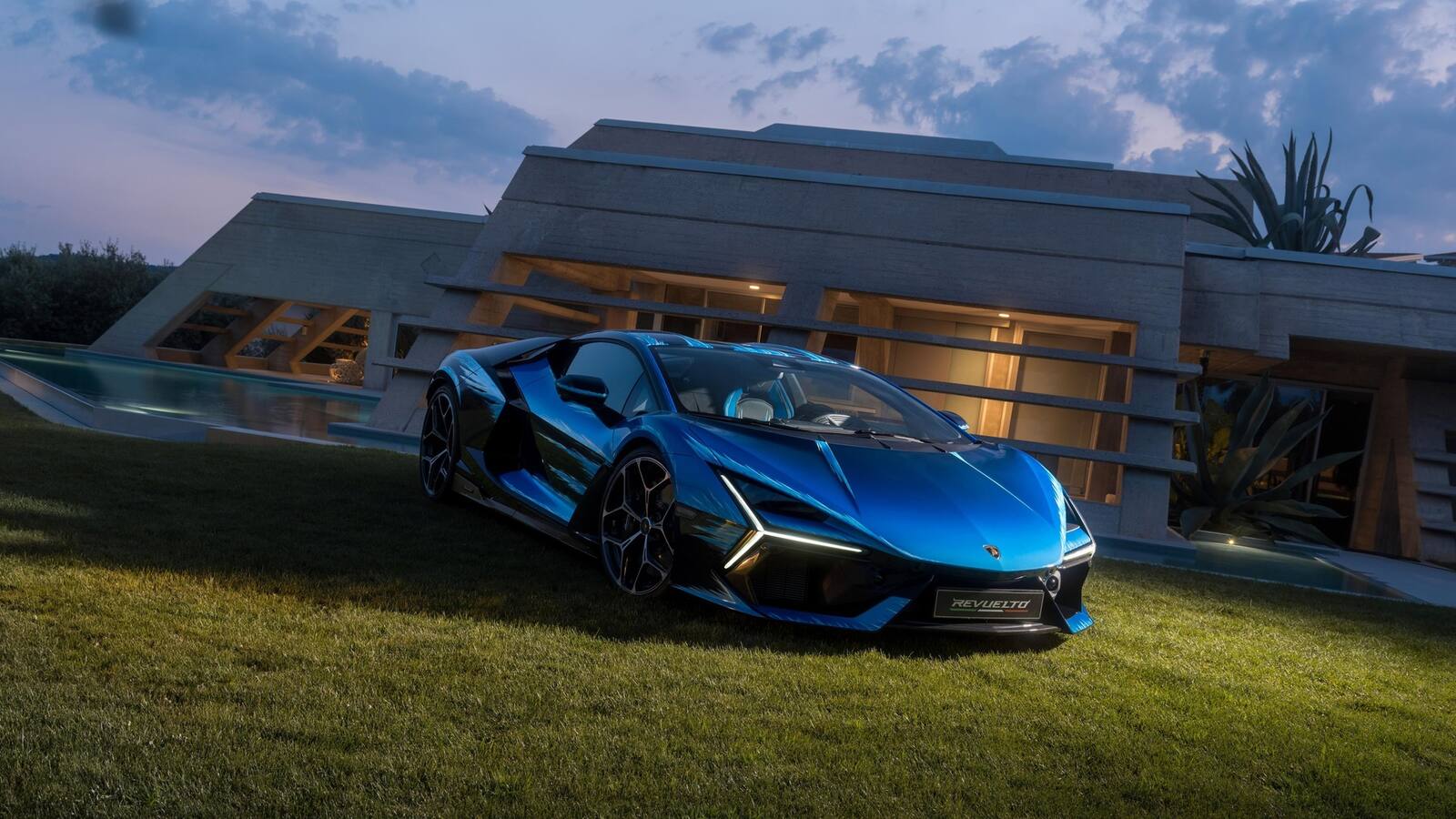
A supercar is defined not by a single technology but by the relentless integration of many. Every component, from the engine block to the door hinges, is designed, tested, and manufactured to standards that would be economically impossible in a mass-produced vehicle. This engineering obsession is what separates a supercar from a car that is merely fast.
The engine remains the centerpiece of most supercars, and the engineering that goes into these power plants is extraordinary. A naturally aspirated Ferrari V12 contains over 3,000 individual components, each machined to tolerances measured in thousandths of a millimeter. The crankshaft alone requires dozens of manufacturing operations, from forging and heat treatment to precision grinding and dynamic balancing. The result is an engine that can rev to 9,000 rpm with absolute reliability, producing power with a smoothness that borders on the musical.
Turbocharged engines present different challenges. Managing boost pressure, intercooler temperatures, and exhaust gas flow at the power levels demanded by modern supercars requires sophisticated engineering of turbocharger design, wastegate control, and intake manifold geometry. The twin-turbo V8 in the Ferrari F8 Tributo, for instance, produces 710 horsepower with virtually no perceptible turbo lag, a triumph of engineering that required years of development in both competition and road car programs.
The Monocoque
The structural foundation of a modern supercar is the monocoque, a single-piece tub that provides the car's primary structure while also defining the cabin space. In most contemporary supercars, this monocoque is made from carbon fiber reinforced polymer, a material that offers an extraordinary ratio of strength to weight. A carbon fiber monocoque can be both lighter and stronger than an equivalent aluminum structure, with the added benefit of being moldable into complex shapes that optimize both structural performance and aerodynamic efficiency.
Manufacturing a carbon fiber monocoque is an intensive process. Layers of pre-impregnated carbon fiber fabric are laid into a mold by hand, with each layer oriented at a specific angle to optimize the structure's strength in the directions where loads are highest. The assembly is then cured in an autoclave, a pressurized oven that consolidates the layers into a single solid structure. The entire process can take days for a single monocoque, compared to minutes for a stamped steel body panel.
Suspension Systems
The suspension of a supercar must accomplish contradictory goals. It must be stiff enough to provide precise handling at high speeds, compliant enough to absorb road imperfections, and adjustable enough to adapt to different driving conditions. Modern supercars achieve this through sophisticated systems that would have been considered science fiction just two decades ago.
Magnetorheological dampers, used in cars from Ferrari, Lamborghini, and GM's Corvette, contain fluid embedded with microscopic iron particles. When an electromagnetic field is applied, the particles align and the fluid becomes more viscous, stiffening the damper. By varying the magnetic field, the system can adjust damping rates continuously, dozens of times per second, providing both comfort and precision that a passive damper cannot match.
Active Aerodynamics
The integration of active aerodynamic elements into supercar design represents one of the most significant engineering advances of the past decade. Rather than accepting a fixed aerodynamic profile that compromises between low drag at high speed and high downforce during cornering, active systems allow the car to optimize its aerodynamics continuously for the current driving conditions.
The Pagani Huayra takes its name from a wind god, and its active aerodynamics live up to that inspiration. Four independently controlled flaps, two at the front and two at the rear, adjust their angle in response to speed, steering input, and lateral acceleration. During cornering, the inner flaps can increase their angle to generate additional downforce on the side of the car that needs it most, improving grip and stability with a precision that passive aerodynamics cannot achieve.
Thermal Management
Managing heat is one of the greatest challenges in supercar engineering. An engine producing 700 or more horsepower generates enormous amounts of thermal energy that must be dissipated without raising the temperature of critical components beyond their design limits. The cooling systems on modern supercars are extraordinarily sophisticated, often comprising multiple radiators, heat exchangers, and oil coolers, each positioned and ducted to optimize thermal performance.
Hybrid supercars add another layer of thermal complexity. Battery packs must be maintained within a narrow temperature range to ensure both performance and longevity. Electric motors and power electronics generate their own heat. The thermal management system of a car like the Ferrari SF90 must simultaneously cool a combustion engine, three electric motors, a battery pack, and the associated power electronics, each with different temperature requirements and thermal characteristics.
Electronics and Software
The modern supercar is as much a software platform as a mechanical one. The electronic control units that manage engine performance, transmission behavior, suspension settings, traction control, and stability control contain millions of lines of code, developed and calibrated through thousands of hours of testing. The interaction between these systems determines much of the car's character, and the calibration of their responses is one of the most time-consuming aspects of development.
Some manufacturers have embraced over-the-air software updates, allowing them to refine and improve their cars after delivery. Tesla pioneered this approach, and traditional supercar manufacturers have followed. Ferrari, for instance, can now update the calibration of its cars' electronic systems remotely, fine-tuning performance characteristics without requiring a visit to the dealer.
The Integration Challenge
Perhaps the greatest engineering challenge in creating a supercar is not any single technology but the integration of all technologies into a coherent, functional, and emotionally engaging whole. A supercar is a system of systems, and the quality of the interactions between those systems determines the quality of the driving experience. This integration cannot be achieved by any single engineering discipline; it requires collaboration between specialists in powertrain, chassis, aerodynamics, electronics, materials, and human factors.
The best supercars are those where this integration is so thorough that the individual technologies become invisible. The driver does not think about the magnetorheological dampers or the torque-vectoring differential or the active aerodynamics. Instead, the driver simply experiences a car that responds to inputs with supernatural precision and rewards skill with performance that feels limitless. That seamless integration is the ultimate engineering marvel.