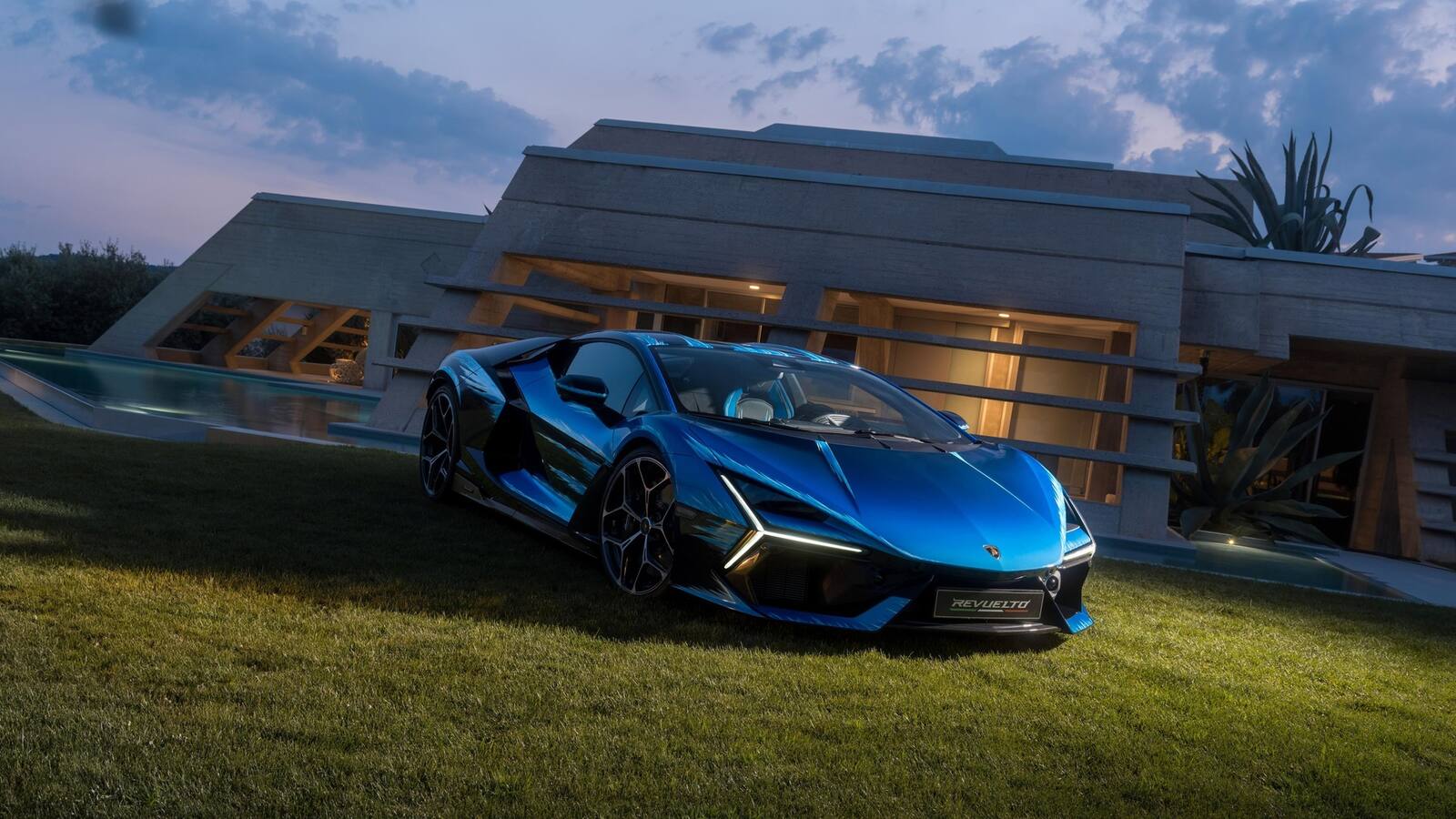
The supercar has always been defined by the relationship between driver and machine. The sensation of controlling a vehicle at the edge of its performance envelope, feeling the tires communicate through the steering wheel, sensing the chassis balance shift under braking: these are the experiences that justify the supercar's existence. Autonomous driving technology threatens to make them obsolete. Or does it?
The autonomous vehicle revolution that has been predicted for over a decade is arriving more slowly and more unevenly than many forecasters anticipated. Full self-driving capability, the kind that would allow a car to navigate any road in any condition without human intervention, remains an engineering challenge of enormous complexity. But partial autonomy, systems that can handle specific driving tasks in defined conditions, is already a reality in production vehicles from multiple manufacturers.
For the supercar industry, the question is not whether autonomous technology can be applied to high-performance vehicles but whether it should be. The supercar exists for driving pleasure, and driving pleasure requires, by definition, a driver. An autonomous supercar would seem to be a contradiction in terms, like a silent concert or an invisible painting. And yet, the technologies that enable autonomy can also enhance the driving experience in ways that were previously impossible.
Assistance, Not Replacement
The most promising application of autonomous technology in supercars is not self-driving but driver assistance. Systems that monitor the road ahead and prepare the car's systems for changing conditions, adjusting suspension stiffness before a corner, pre-loading the brakes before a stopping zone, selecting the optimal gear before an acceleration event, can make the driving experience both safer and more enjoyable without removing the driver from the equation.
Ferrari's approach to this technology is instructive. The company has explicitly stated that it will never build a fully autonomous car, but it has enthusiastically adopted driver-assistance technologies that enhance performance. The Side Slip Control system on current Ferrari models uses data from multiple sensors to monitor the car's dynamic state and intervene when the car approaches its limits, not to prevent the driver from exploring those limits but to make exploration safer and more accessible.
Connectivity and Data
Connected car technology offers supercars capabilities that would have seemed like science fiction just a decade ago. Real-time traffic data can optimize route planning. Vehicle-to-infrastructure communication can alert the driver to changing road conditions. Over-the-air software updates can improve performance, add features, and fix issues without a dealer visit. These connectivity features do not diminish the driving experience; they augment it.
The data generated by connected supercars is also valuable to manufacturers. By analyzing how owners actually use their cars, studying driving patterns, performance usage, and feature engagement, manufacturers can make better decisions about future product development. This data-driven approach to product planning represents a significant shift from the traditional method of relying on engineering intuition and customer surveys.
The Track Mode Question
One area where autonomous technology and supercar performance intersect productively is on the racetrack. Several manufacturers now offer track-oriented driving modes that use autonomous driving technologies to optimize the car's performance. These systems can analyze the track layout, identify the optimal racing line, and adjust the car's setup accordingly. Some can even provide real-time coaching, suggesting braking points and turn-in locations to help the driver improve.
Porsche's Track Precision App, available on the 911 GT3 and other performance models, records detailed telemetry data during track sessions and provides analysis that helps drivers identify areas for improvement. McLaren's Performance Data Recorder offers similar capabilities. These tools use the same sensor technology and data processing that enable autonomous driving, but in service of enhanced human driving rather than as a replacement for it.
The Regulatory Landscape
Government regulations around the world are increasingly requiring advanced driver-assistance systems in all new vehicles. Automatic emergency braking, lane-keeping assistance, and drowsiness detection are becoming mandatory in many markets. For supercar manufacturers, integrating these systems without compromising performance or driving feel is a significant engineering challenge.
The challenge is both technical and philosophical. A lane-keeping system that gently corrects the steering when the car drifts toward a lane marking is appropriate on a highway cruise but potentially dangerous during spirited driving on a mountain road. Emergency braking systems must be sensitive enough to prevent accidents but not so aggressive that they intervene during normal high-performance driving. Calibrating these systems for the unique use case of a supercar requires extensive development and testing.
Artificial Intelligence in Performance
Artificial intelligence is finding applications in supercar performance that go beyond autonomous driving. Machine learning algorithms can optimize powertrain calibrations in real time, adapting engine mapping, turbo boost pressure, and hybrid system behavior to the driver's style and the current driving conditions. These AI systems learn from experience, becoming more effective the more they are used.
Predictive AI systems can also anticipate maintenance needs, identifying patterns in sensor data that indicate developing problems before they become failures. For supercar owners, this capability means less unexpected downtime and more time enjoying the car. For manufacturers, it means fewer warranty claims and higher customer satisfaction.
The Human Element
The fundamental question that autonomous technology raises for the supercar industry is whether the human element of driving can survive the technological revolution that is transforming transportation. The answer, most industry leaders believe, is yes, but it requires a deliberate commitment to preserving the driving experience even as the technology to eliminate it becomes available.
The supercar of the future will almost certainly be capable of driving itself. But it will also be capable of providing its driver with the most engaging, most rewarding, most viscerally satisfying driving experience ever created, enhanced by the same technologies that make autonomy possible but deployed in service of human pleasure rather than as a substitute for it. The supercar will remain, as it has always been, a celebration of the human desire to go fast, to feel connected to a machine, and to experience the world from behind the wheel. Technology will change how that desire is fulfilled, but it will not change the desire itself.